About Blood Cancer / FAQ’s
We understand that you may have questions about the bone marrow and blood stem celldonation process, and we’re here to help.
GENERAL QUESTIONS
What is blood cancer
Blood cancer, also known as hematological malignancy, refers to a group of cancers that affect the blood, bone marrow, and lymph nodes. These conditions disrupt the normal production and function of blood cells. As the cancerous cells grow and multiply, they can cause severe damage to both the immune system and the circulatory system, posing significant health risks.
What is the difference between “bone marrow” and “blood stem cell”donation?”
Signing up as a potential donor is voluntary, as is donating IF found to be a matching donor. We think of it as a ‘humanitarian commitment’ given that you may be the only match the patient has. When you register as a donor, you can choose to donate either bone marrow or blood stem cells, depending on the patient’s needs. Bone marrow is the spongy tissue found inside your bones that produces blood stem cells. These cells are responsible for generating red and white blood cells, as well as platelets. Most donors who are asked to donate bone marrow are matched to young children, under the age of 3. Blood stem cells also circulate in your bloodstream, where they are known as peripheral blood stem cells (PBSC). The procedures for donating bone marrow and blood stem cells are different. However, most donors (over 80%) are asked to donate stem cells from their bloodstream.
What is human leukocyte antigen (HLA) typing?
Human leukocyte antigen (HLA) typing is a DNA-based tissue test that is used to match patients with donors for blood stem cell transplants. HLA refers to proteins, or “markers,” that are found on most cells in the body. Your immune system relies on these markers to identify which cells belong to your body and which do not. A closer match between the donor’s and patient’s HLA types increases the likelihood that the patient’s body will accept the donated cells and allow them to grow, leading to the production of new, healthy cells.
What is a bone marrow transplant?
A bone marrow or blood stem cell transplant is a potentially life-saving treatment for patients battling blood cancers, such as leukemia and lymphoma, as well as blood disorders like aplastic anemia and sickle cell disease. This transplant replaces the patient’s unhealthy blood stem cells with healthy ones from a donor, like you. The healthy cells then create a new immune system for the recipient.
Before the transplant, patients typically undergo high doses of chemotherapy and possibly radiation therapy to eliminate all diseased cells in their bodies, along with their immune systems. This is done to ensure that the body does not reject the donated cells after the transplant.
During the transplant process, the donated cells are infused into the patient’s bloodstream, where they travel to the bone marrow. Once there, they begin to grow and produce new, healthy blood cells in a process known as engraftment.
What diseases do bone marrow transplants treat?
Blood stem cell transplants can be the most effective or only treatment to cure approximately 70 diseases including leukemia, lymphoma, myeloma, sickle cell disease, severe aplastic anemia, and some immune system and inherited metabolic disorders. Each year, nearly 20,000 Americans require bone marrow transplants. (Source: U.S. Department of Health & Human Services, based on data from NMDP)
What is a Peripheral Blood Stem Cell (PBSC) Donation?
This donation method is used in the majority of cases, over 80%. PBSC (Peripheral Blood Stem Cell) donation is a non-surgical procudre often done in a blood donation center. During this process, blood stem cells are collected from your bloodstream. During the procedure, blood is drawn from one arm and passed through a machine that filters out the blood stem cells (for the patient). The remaining blood is then returned to you through your other arm. The process is similar to donating plasma or platelets. Most donors are watching a movie.
To increase the number of blood stem cells before the donation, you will receive daily injections of a synthetic protein called filgrastim for 4 days leading up to the procedure, including on the morning of the donation. The actual donation can take between 4 to 8 hours and may occur over the course of 1 to 2 days.
What is a Bone Marrow Donation?
The procedure is carried out as an outpatient procedure under anesthesia. Marrow cells are harvested from the back of the pelvic bone using a surgical syringe. These donors are sore when they wake up in recovery, the soreness is temporary, the feeling of giving a second chance at life is permanenThis is the preferred method of donation if the patient is a young child, typically under the age of 3.
ELIGIBILITY & REGISTRATION
I moved. How do I update my details?
I registered, but I’m not sure. Should I do it again?
We kindly request that if you think you have already registered, you call for confirmation DKMS (our registration partner) or any other organization. Registering more than once can lead to being listed on the registry multiple times and provide a flase sense of hope for the patient, their friends and family.
I registered a long time ago. Do I need to re-swab to stay registered?
No, once you have registered and received confirmation, you are all set. After registration, you will remain on the registry until the age of 61 unless you request to be removed earlier.
No. When you register, our registration partner, DKMS, will add you to the registry for any patient searching for a matching donor. If you are interested in finding out if you can donate to a specific person only, you must undergo private testing through the patient’s medical team.
I’m over 55, why can’t I register?
The age limit is not intended to be discriminatory. Medical guidelines have been established to ensure the safety of the donor and to provide the best possible treatment for the patient. Furthermore, research shows that cells from younger donors tend to produce more successful outcomes for patients.
After you complete your registration either at an event or online, our registration partner, DKMS, enters your information into a secure donor database and sends your swabs to a laboratory for HLA (human leukocyte antigen) typing. HLAs are protein markers found on your cells that are used to match patients with donors for transplantation.
Once your HLA typing is complete, DKMS lists you anonymously by donor number and HLA type on the Be The Match Registry®, which is operated by the National Marrow Donor Program. You will then receive a letter from DKMS informing you that you are officially listed and available to doctors who are searching the registry for potential matches for their patients.
MATCHING PROCESS
How are patients matched with donors?
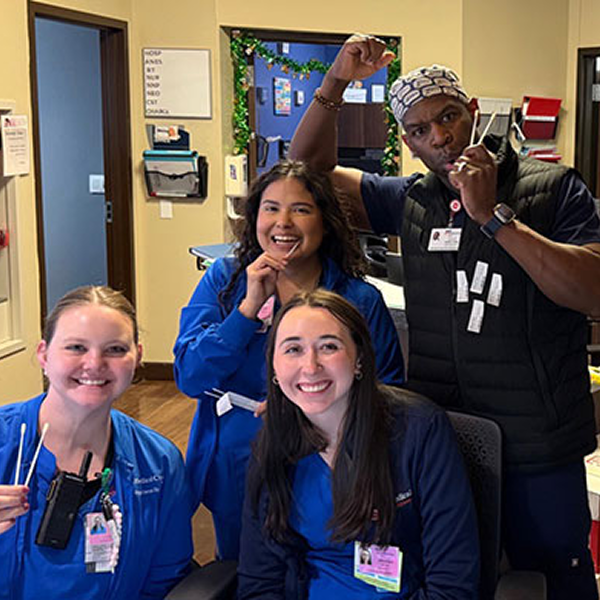
During a donor drive or joining the registry online, you’ll swab your cheeks and provide your contact information. Your sample is then sent to a laboratory for typing. Your contact details and typing results are added anonymously to the registry using a unique ID code. Once you’re included in the registry, you will be included in searches by patient medical teams.
What happens if I match a patient?
A representative from DKMS will guide you through each step and will be available to answer any questions you may have. Additional testing will be required to assess if you are the best match. This process involves filling out an online health history questionnaire, providing a blood sample, and undergoing a physical examination if you are found to be the best matching donor for the patient.
Do ancestry and ethnicity affect matching?
Heritage is an important factor. Like hair and eye color, your HLA type is inherited, so the best matches usually occur between patients and donors who share the same ancestry.
Am I the only match?
A patient may have one OR several potential matching donors. This information is only accessible to the patient’s medical team. The doctor will choose the best donor based on factors such as the closeness of the HLA match, as well as the donor’s age, sex at birth, size, health history, availability, and other relevant considerations. The donor will have input on the donation method. If you are contacted as a potential match but are not selected for donation, you will be notified and will remain on the registry to be available for other patients in need of a match until you turn 61.
What makes a good match?
Doctors examine ten specific HLA markers to assess the compatibility between a donor and a patient. Most require at least a 9 out of 10 match, but a perfect 10 out of 10 match is ideal. The closer the match, the better the chances that the patient’s immune system will recognize the donated cells as its own, allowing them to grow and produce new, healthy blood cells.
How long do I have to decide?
When you register as a potential donor, you are making a ‘humaniterian commitment’. If matched to a patient, you always have the right to change your mind, a late decision to decline donation can be life-threatening for a patient. Therefore, we urge you to carefully consider your choice once you learn that you are a potential match. It’s important to discuss your decision with family, friends, and your DKMS coordinator who can answer your questions and even connect you with a past donor who can share firsthand insights about the donation process.
DONATION PROCESS
What is the National Marrow Donor Program (NMDP)?
All individuals registered through Earl Young’s Team are included in the National Marrow Donor Program registry.
You may receive a call as a potential match within weeks of registering, or it could take years. There’s also a possibility that you may never receive a call. However, if you are called, you could be the only person who can save that patient’s life.
No. When you register with DKMS, you make yourself available as a potential donor for patients in need of a transplant. If you match with a patient, you will be asked to donate bone marrow or blood stem cells, which involves procedures that are different from donating blood. You can continue to be a regular blood donor after registering as a bone marrow donor; however, if you do match with a patient, we request that you refrain from giving blood for one month prior to the donation.
What are the two ways to donate?
You may be asked to donate through either peripheral blood stem cell (PBSC) collection or bone marrow donation. The patient’s doctor will select the method that is most likely to lead to the best outcome for the patient. You will have input and we ask that registrants feel comfortable proceeding with either method.
Can I choose the donation method?
The donation method is chosen by the patient’s doctor along with the donor based on what is best for the patient and is most comfortable for the donor.
Does donating hurt?
Both donation procedures may cause some discomfort, but most donors find that any pain they experience is easily outweighed by the positive feelings of knowing they might be saving a life.
Is bone marrow taken from my spine?
No. The marrow is extracted from the back of your pelvic bone using a special syringe
Will I permanently lose my stem cells?
When you donate stem cells, the amount collected is only a small fraction of the total stem cells in your body. Your donation will not weaken your immune system, and your body will naturally replenish the cells within a few weeks.
What are the possible side effects and recovery of PBSC?
While taking filgrastim to boost stem cell count, you may experience flu-like symptoms such as headaches, bone and muscle aches, and fatigue. Most side effects typically subside within 48 hours of donating. Your stem cells will replenish within one week. DKMS will check in with you regularly.
After donating, you might experience some pain, bruising, and stiffness for up to two weeks. However, you should be able to return to work, school, and regular activities within a week. Your marrow will completely replenish itself within 3 to 6 weeks. Your DKMS coordinator will check in with you regularly after your donation to ensure you are recovering properly. If you are not recovering as expected, DKMS will arrange and cover the cost of any necessary follow-up care.